

Can You Plant It? Dawn Redwood Growing Zones Explained
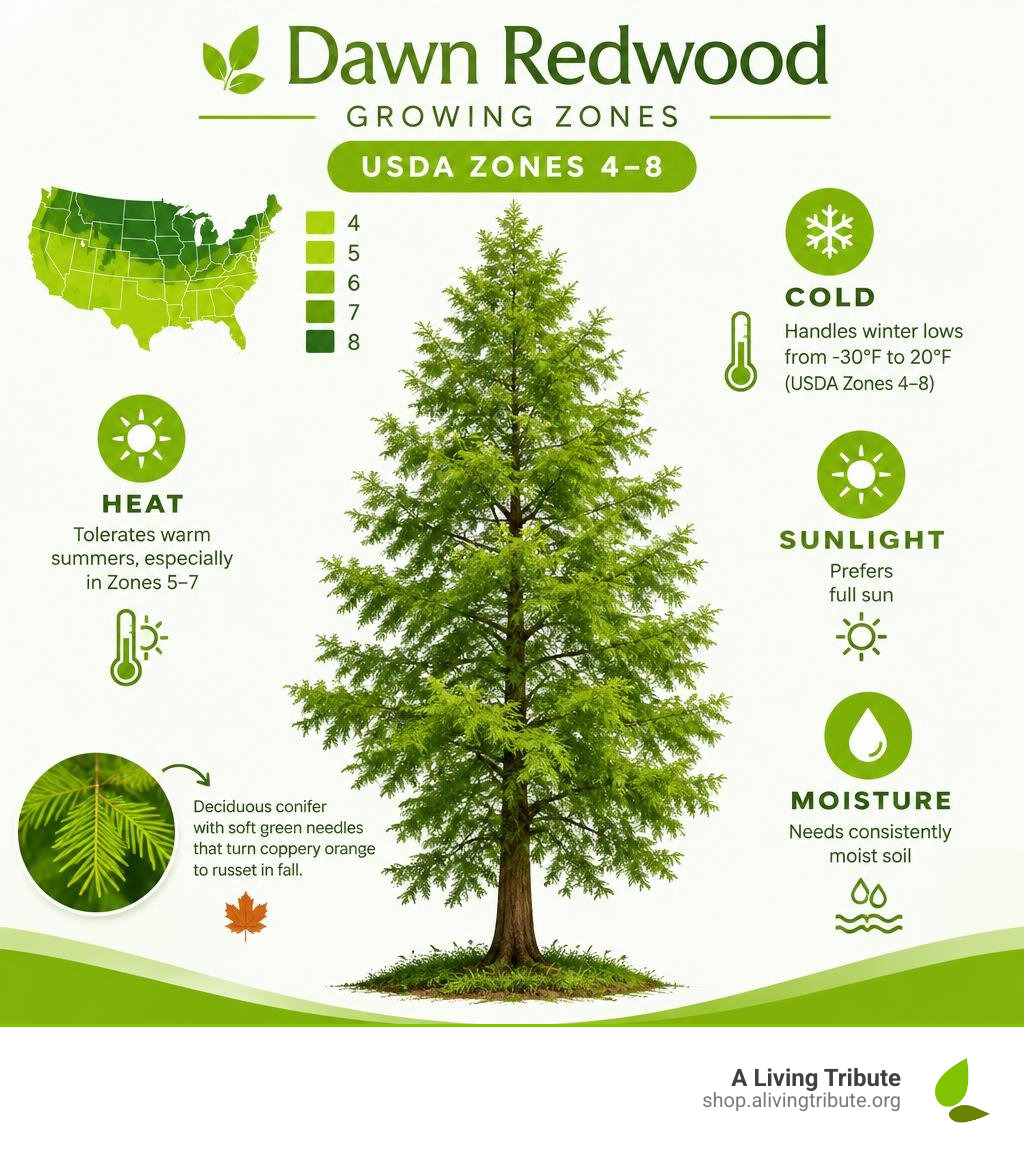
Dawn redwood growing zones are USDA Zones 4 through 8. Plant Metasequoia glyptostroboides where winter lows generally stay within that range, give it full sun, and keep the soil consistently moist. It is especially well suited to Zones 5-7, but can handle Zone 4 cold and Zone 8 warmth when it has a protected site and reliable water.
This fast-growing "living fossil" is a deciduous conifer, so its soft green needles turn coppery orange to russet in fall and drop for winter. The main limits are not just cold: dry soil, repeated summer drought, late spring freezes, and extreme southern heat can all reduce growth.
Our work connecting people with meaningful tree-planting gifts has made careful regional tree selection essential. In this guide, we will explain dawn redwood growing zones, winter limits, and the site conditions that help this remarkable tree thrive for decades.
Understanding Dawn Redwood Growing Zones and Temperature Thresholds
The dawn redwood (Metasequoia glyptostroboides) carries an extraordinary history. Known only through 150-million-year-old fossil records until a small, wild population was discovered in Lichuan County, China, in the 1940s, this ancient species has proven remarkably adaptable. Today, horticulturists value it as a fast-growing, low-maintenance ornamental shade tree that adapts seamlessly to modern suburban landscapes, parks, and restoration projects.
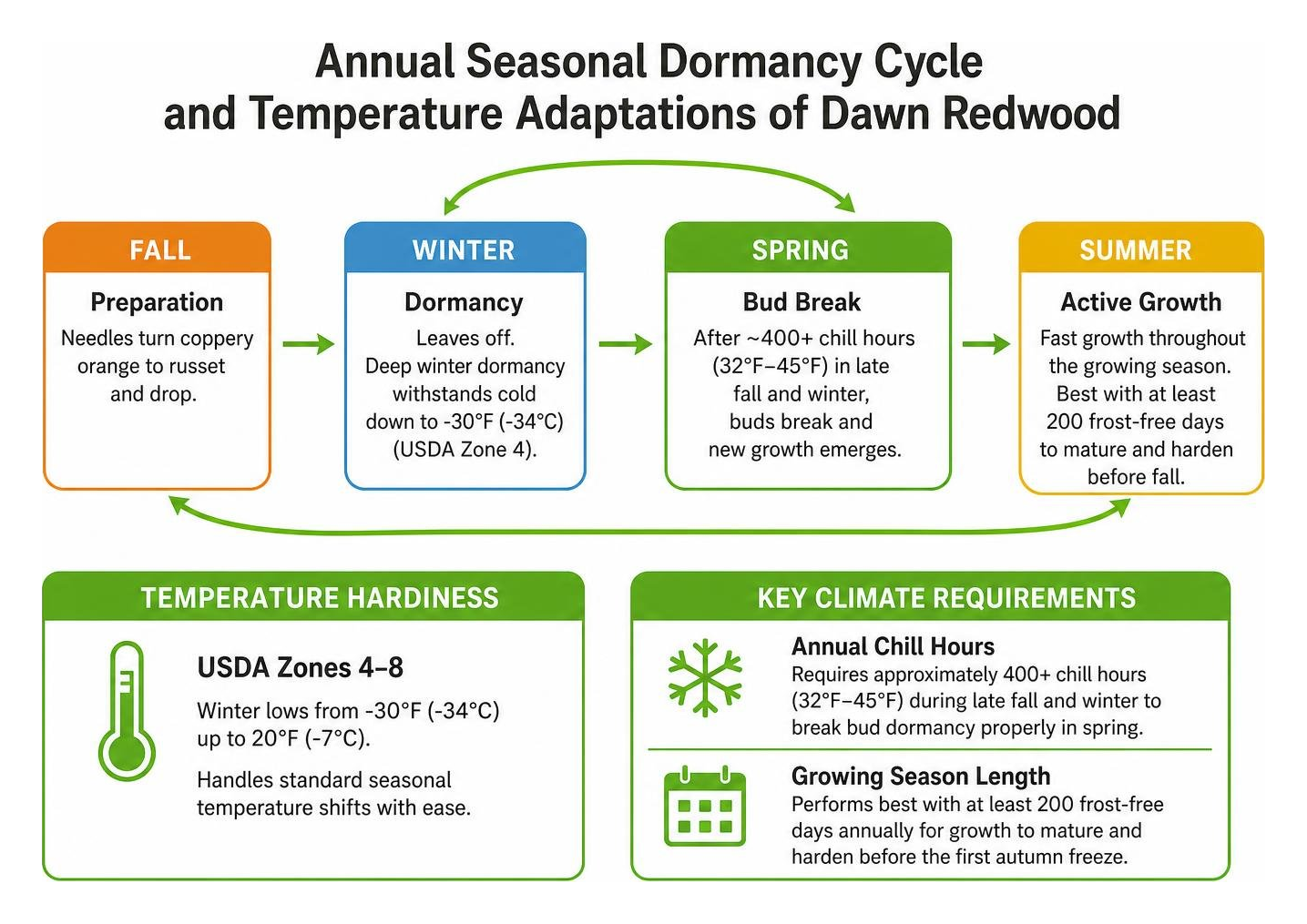
To successfully cultivate this living relic, you must understand its relationship with cold thresholds, chilling hours, and seasonal temperature fluctuations. The primary band for the tree covers USDA Plant Hardiness Zones 4 through 8, encompassing winter temperature extremes from -30°F (-34°C) up to 20°F (-7°C). As highlighted in The Morton Arboretum's Dawn Redwood Guide, the species handles standard seasonal shifts with ease, dropping its foliage in late autumn to enter deep winter dormancy.
Beyond simple winter low temperatures, two primary climate metrics dictate long-term success:
- Annual Chill Hours: Dawn redwoods require approximately 400 or more chill hours (temperatures between 32°F and 45°F) during late fall and winter to break bud dormancy properly in spring.
- Growing Season Length: The tree performs best in regions providing at least 200 frost-free days annually, allowing its extensive annual growth to mature and harden off before the first autumn freeze.
Optimal USDA Dawn Redwood Growing Zones: Zone-by-Zone Breakdown
While dawn redwood can survive across a wide geographical belt, its growth rate and seasonal behavior vary depending on where you plant it:
| USDA Zone | Average Annual Minimum Temp | Typical Annual Growth Rate | Primary Climate Considerations | Frost Vulnerability |
|---|---|---|---|---|
| Zone 4 | -30°F to -20°F (-34°C to -29°C) | 1.5–2.5 feet / year | Deep winter cold; short growing seasons | Moderate to High (spring freeze) |
| Zone 5 | -20°F to -10°F (-29°C to -23°C) | 2.5–3.5 feet / year | Strong cold tolerance; reliable fall coloration | Low to Moderate |
| Zone 6 | -10°F to 0°F (-23°C to -18°C) | 3.0–4.0 feet / year | Ideal climate; rapid trunk taper development | Low |
| Zone 7 | 0°F to 10°F (-18°C to -12°C) | 3.0–5.0 feet / year | Extended growing season; excellent vigor | Low |
| Zone 8 | 10°F to 20°F (-12°C to -7°C) | 2.0–3.5 feet / year | Summer heat waves; high moisture demand | Very Low |
In Zone 4, the tree meets its northern cold-hardiness limit. While mature wood survives extreme negative temperatures down to -30°F, early autumn freezes can catch late-season soft growth off guard. In Zones 5 through 7, dawn redwoods experience their prime growth band. Here, the combination of adequate winter chill, ample summer rainfall, and moderate seasonal transitions allows the tree to grow rapidly—often 3 to 4 feet per season when young. In Zone 8, the species handles winter effortlessly, but growers must monitor summer soil moisture closely to avoid heat-induced foliage scorch.
Pushing Boundaries: Marginal Dawn Redwood Growing Zones and Climate Limits
Attempting to establish a dawn redwood outside its USDA 4–8 range introduces distinct physiological hurdles:
- Zone 3 (Sub-arctic Cold): Minimum temperatures dipping below -35°F cause severe cambium freezing, terminal bud death, and deep stem cracking. Planting in Zone 3 is generally unviable without intensive artificial winter protection.
- Zone 9 and Above (Subtropical Heat): While the tree may survive mild winters, the lack of sufficient chill hours can cause erratic spring foliation. Furthermore, prolonged dry heat and intense solar radiation dry out the root zone, leading to premature needle drop and canopy dieback.
If you are planting in marginal zones or exposed sites, microclimate management is critical:
- Windbreak Placement: Position trees behind natural topographical ridges, evergreen shelterbelts, or buildings to deflect freezing northwest winter winds that desiccate dormant branches.
- Elevated Planting: Avoid low-lying frost pockets where cold air settles in late spring. Planting midway up a gentle slope prevents early tender shoots from being blackened by unseasonal frosts.
- Urban Heat Island Benefits: In northern marginal zones, urban courtyards and residential microclimates can provide a valuable buffer of 3°F to 5°F, effectively shifting a site from Zone 4b to Zone 5a.
Environmental Requirements: Soil, Sunlight, and Moisture Across Zones
Understanding regional temperatures is only half the battle; dawn redwoods also have specific preferences regarding soil and light. Full sunlight is vital for rapid development and vibrant autumn color. Aim for an open location receiving at least 6 to 8 hours of unfiltered direct sun daily. While young saplings can tolerate partial shade, dense shade results in sparse branch structures and stunted terminal growth.
According to the Missouri Botanical Garden Plant Finder, dawn redwoods thrive in deep, humusy, well-drained soils that hold steady moisture, though they demonstrate remarkable adaptability across diverse soil types:
- Moisture Tolerance: Unlike many conifers that suffer from root rot in wet ground, dawn redwoods naturally frequent riparian zones and river valleys. They comfortably tolerate soggy conditions, seasonal flooding, and heavy clay soils.
- pH Preference: The tree prefers slightly acidic to neutral soil conditions, with an optimal pH range of 5.0 to 7.0. In highly alkaline soils (pH above 7.5), you may observe chlorosis—a yellowing of the foliage between leaf veins caused by iron deficiency.
- Drought Sensitivity: The Achilles' heel of this species is prolonged drought. In dry, sandy soils, dawn redwoods struggle to maintain needle turgor, causing their soft feathery needles to turn brown and shed months before the normal autumn cycle.
Growth Rate, Mature Size, and Seasonal Needle Color
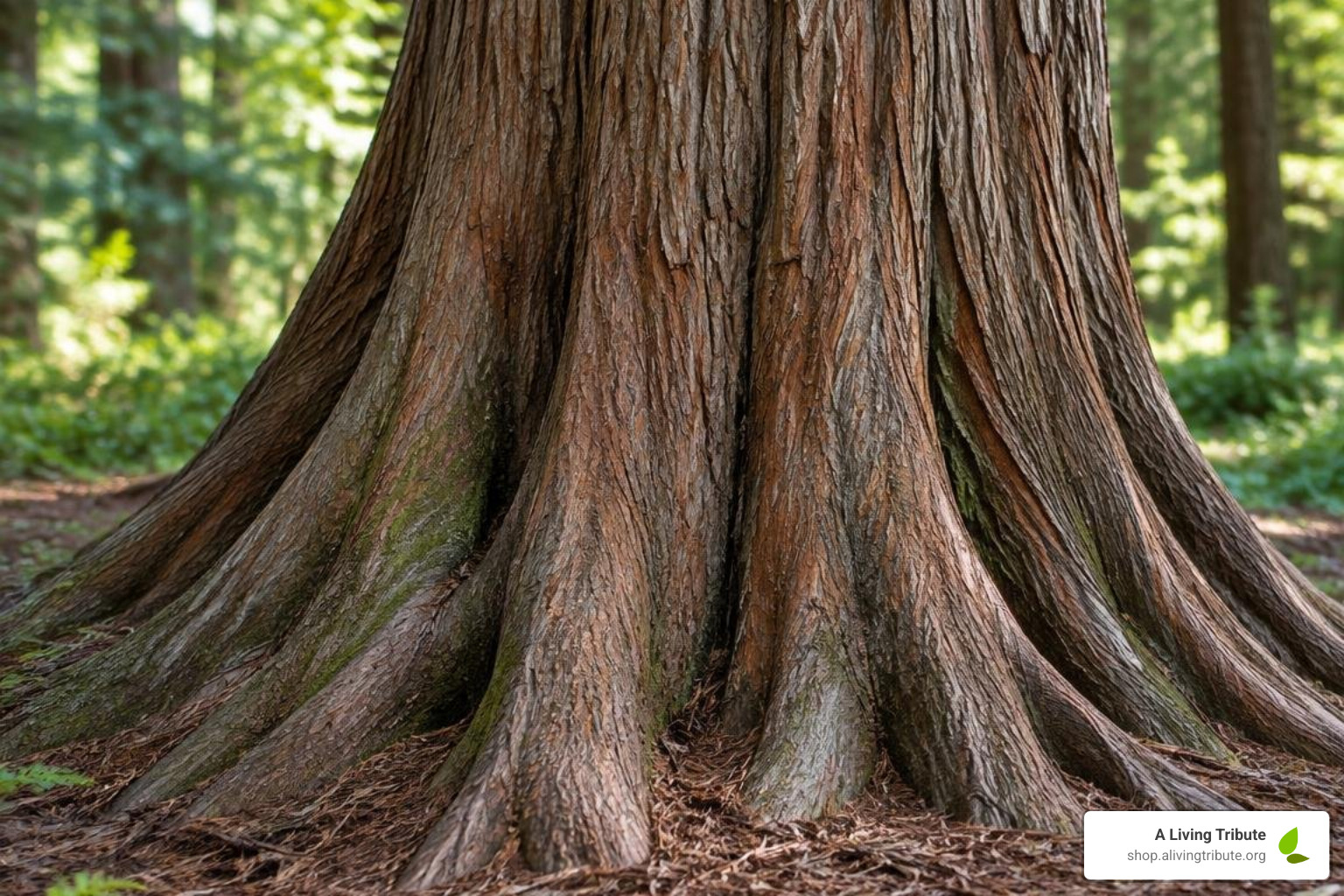
Under supportive growing conditions, the dawn redwood is one of the fastest-growing specimen trees in North America. Young saplings routinely add 2 to 4 feet in height annually, reaching 25 to 30 feet in their first ten years. At full maturity, cultivated specimens typically achieve heights of 70 to 100 feet with a pyramidal canopy spread of 15 to 25 feet, developing a massive fluted and buttressed trunk base that anchors the tree securely.
The seasonal progression of its foliage provides exceptional landscape interest throughout the year:
- Spring: Buds burst in early spring, revealing soft, bright lime-green bipinnate needles that are soft to the touch.
- Summer: The canopy matures into a lush, deep green, casting cooling shade across large lawns or open meadows.
- Autumn: As temperatures cool in October and November, the needles shift to brilliant golden-yellow, transitioning into deep pumpkin-orange and rich russet-bronze.
- Winter: After needle drop, the tree showcases an architectural silhouette of sweeping, upswept branches and exfoliated, shredded reddish-brown bark.
Zone-Specific Planting and Maintenance Best Practices
Setting up a dawn redwood for long-term health requires proper planting timing based on your regional zone:
- Northern Zones (4–5): Early spring planting is ideal. This gives the root system an entire spring, summer, and early fall to anchor into native soil before encountering subzero winter temperatures.
- Southern and Transition Zones (6–8): Early autumn planting often yields superior results. Mild winter soil temperatures allow root expansion to continue underground while the canopy rests in dormancy, preparing the sapling for vigorous growth the following spring.
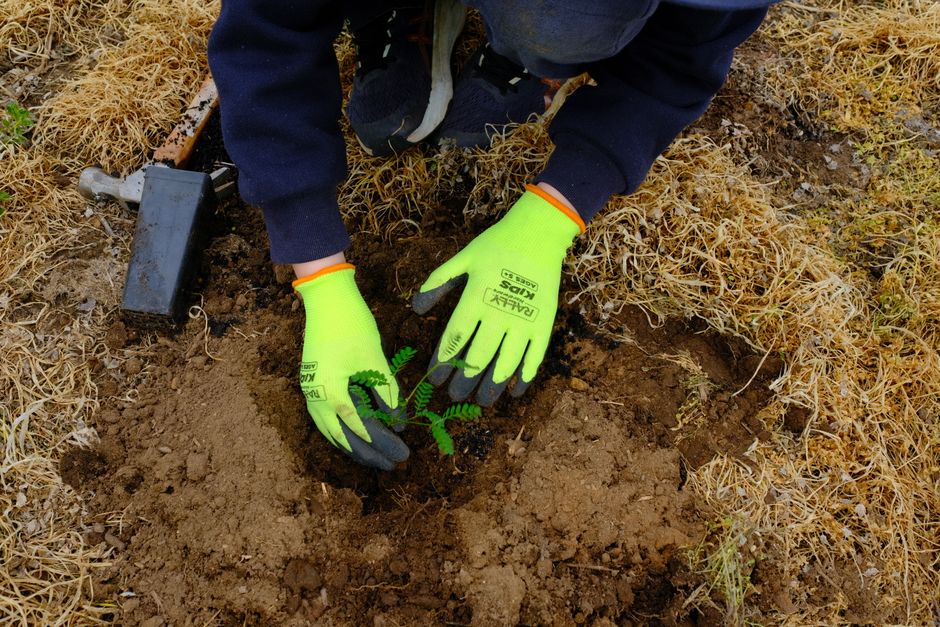
Follow these fundamental care steps to ensure optimal establishment:
- Hole Preparation: Dig a planting basin two to three times wider than the root ball, but no deeper than the root flare. The top of the root flare should sit level with or slightly above the surrounding grade.
- Watering Regimen: Provide 10 to 15 gallons of water per week during the first two growing seasons. In high-heat regions (Zone 8), increase watering frequency during dry summer spells.
- Mulching: Apply a 3- to 4-inch layer of organic wood chips or shredded bark around the base, extending out to the drip line. Keep mulch 3 to 4 inches away from direct contact with the trunk bark to prevent moisture accumulation that could foster rot.
- Fertilization: Minimal fertilizer is required. If soil tests show nutrient deficiencies, apply a balanced, slow-release organic fertilizer in early spring as new buds emerge. Avoid late-summer nitrogen applications, which can trigger late flushes of tender growth that winter frosts will damage.
Selecting Cold-Hardy and Dwarf Cultivars
Depending on garden scale and specific aesthetic goals, several outstanding cultivars are available:
- 'Gold Rush' (also known as 'Ogon'): Notable for its striking chartreuse-to-golden foliage that retains color throughout the summer months. It grows at a slightly slower pace than the parent species, reaching a mature height of 40 to 50 feet with a 15-foot spread. It performs reliably across Zones 5 through 8.
- 'National': Selected by the U.S. National Arboretum, this cultivar exhibits a strictly narrow, columnar-pyramidal form with strong central leader dominance. It is an exceptional candidate for formal avenues, narrow boundary lines, and expansive boulevards in Zones 4 to 8.
- 'Miss Grace': A unique weeping dwarf form that features pendulous, cascading branchlets. Suitable for small residential gardens, rockeries, or large container plantings, reaching only 8 to 10 feet in height when staked. Thrives in Zones 5 through 8.
Protecting Dawn Redwoods from Frost and Extreme Weather
While the dawn redwood is generally disease-resistant and trouble-free, climate extremes and environmental stressors require mindful oversight:
- Late Spring Frosts: Unseasonal freezes after bud break can scorch new green tips. While cosmetic damage may turn new shoots black and limp, healthy trees will quickly produce secondary buds from dormant nodes. Prune away dead, blackened tips once freezing risks pass.
- Winter Sunscald and Frost Cracking: In northern regions where bright winter sun reflects off snow cover, rapid temperature shifts can cause bark cracking on young, thin-barked trunks. Wrapping the trunk with breathable tree wrap during its first three winters mitigates this risk.
- Fungal Canker (Botryosphaeria): Stressed, drought-stricken trees become vulnerable to sunken stem cankers. Maintain consistent soil hydration to prevent this opportunistic fungus from establishing.
- Japanese Beetles: Adult beetles occasionally feed on soft summer foliage in Zones 6 and 7. Healthy, mature dawn redwoods generally tolerate minor defoliation without lasting harm, but young saplings may benefit from organic neem oil sprays or hand-removal during peak outbreaks.
Selecting the right tree for your geographic region is one of the most effective ways to prevent stress and disease. Before planting, always consider the species’ long-term compatibility with the local climate, soil conditions, and surrounding ecosystem.
Frequently Asked Questions About Growing Dawn Redwood
Can a dawn redwood survive freezing winters in USDA Zone 4?
Yes, mature dawn redwoods reliably survive winter temperatures dropping to -30°F in USDA Zone 4. To ensure young saplings establish without winter injury, plant them in early spring in a location shielded from strong prevailing winds. Applying a generous 3- to 4-inch layer of organic mulch around the root zone helps insulate the soil and protects tender roots from deep freezing cycles.
How do you distinguish a dawn redwood from a bald cypress in cooler zones?
While both trees are deciduous conifers with feathery foliage and pyramidal forms, they are easily distinguished by their leaf and branch arrangements:
- Dawn Redwood (Metasequoia glyptostroboides): Features strictly opposite leaf and branchlet arrangement (needles and stems emerge directly across from each other in matching pairs). Its branchlets also emerge beneath armpit-like depressions on the main stems.
- Bald Cypress (Taxodium distichum): Features alternate (spiraling) needle and branchlet arrangements. Additionally, bald cypress frequently develops woody "knees" (pneumatophores) when planted in wet soils, which dawn redwoods do not produce.
Does a dawn redwood lose all its needles every winter?
Yes. As a deciduous conifer, the dawn redwood naturally drops 100% of its needles every autumn. Before shedding, the soft green summer canopy transitions through a dramatic display of amber, burnt-orange, and russet-copper hues. The shed needles break down quickly into rich, acidifying organic mulch beneath the tree, and the bare branches reveal their sculptural silhouette throughout the winter months before bursting with fresh green foliage in early spring.
Conclusion: Growing a Resilient Living Fossil
The dawn redwood is an extraordinary bridge between prehistoric botanical history and modern sustainable landscaping. Thriving across USDA hardiness zones 4 through 8, its exceptional growth rate, architectural presence, and seasonal color transitions make it one of the most rewarding specimen trees you can plant. By matching its basic cultural requirements—full sunlight, consistent soil moisture, and adequate room to expand—you can enjoy a living legacy that endures for generations.
Whether you are enhancing your personal garden or looking to restore native forest lands across North America, planting trees creates an enduring connection to the natural world. You can honor a loved one, celebrate a milestone, and support vital reforestation projects by planting native forest trees (including redwood trees) through A Living Tribute.